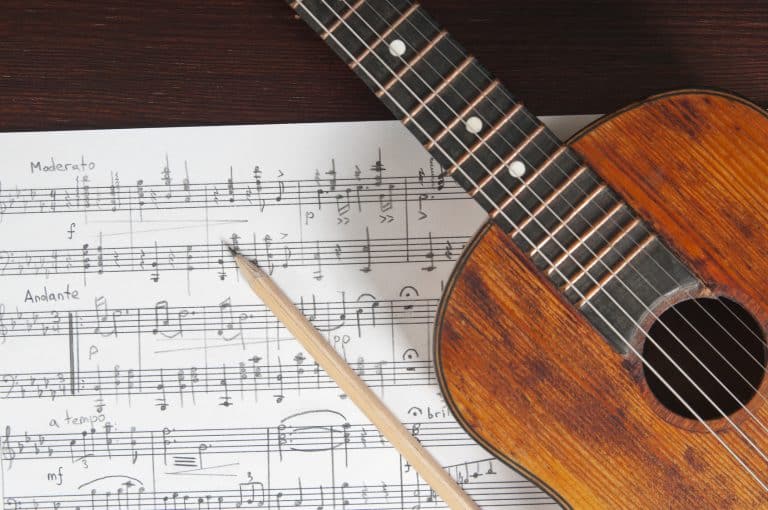
 Sheet Music Mobile is a site for those who wants to access popular sheet music easily,
letting them download the sheet music for free for trial purposes.
It's completely free to download and try the listed sheet music, but you have to delete the files after 24 hours of trial.
Don't forget, if you like the piece of music you have just learned playing,
treat the artist with respect, and go buy the original sheet music.
Piano Sheet Music
 "The guitar is a means of expressing music, When you get into the emotional side of it, then it's not the guitar that matters so much as the music itself. But the guitar is the vehicle I use. It's how I express myself. As for the emotional side, music takes up where language leaves off. To try and verbalize what music says, emotionally and spiritually, is futile. Let me put it this way, Louis Armstrong once said if you've got to ask, you'll never know." Charlie Byrd - Jazz Guitar
John Williams
John Towner Williams (born February 8, 1932) is an American composer, conductor, and pianist. In a career that spans six decades, Williams has composed many of the most famous film scores in Hollywood history, including Star Wars, Superman, Home Alone, the first three Harry Potter movies and all but two of Steven Spielberg's feature films including the Indiana Jones series, Schindler's List, E.T. the Extra-Terrestrial, Jurassic Park and Jaws. He also composed the soundtrack for the hit 1960s television series Lost in Space as well as the fanfare of the DreamWorks Pictures' logo.
Williams has composed theme music for four Olympic Games, the NBC Nightly News, the rededication of the Statue of Liberty, and numerous television series and concert pieces. He served as the principal conductor of the Boston Pops Orchestra from 1980 to 1993, and is now the orchestra's laureate conductor.
Williams is a five-time winner of the Academy Award. He has also won four Golden Globe Awards, seven BAFTA Awards and 21 Grammy Awards. With 45 Academy Award nominations, Williams is, together with composer Alfred Newman, the second most nominated person after Walt Disney. He was inducted into the Hollywood Bowl Hall of Fame in 2000, and was a recipient of the Kennedy Center Honors in 2004.
Franz Liszt
Franz Liszt (Hungarian: Ferencz Liszt, in modern usage Ferenc Liszt, from 1859 to 1865 officially Franz Ritter von Liszt) (October 22, 1811 – July 31, 1886) was a Hungarian composer, virtuoso pianist and teacher. He was also the father-in-law of Richard Wagner. In 1865 he became abbot in the Roman Catholic Church.
Liszt became renowned throughout Europe during the 19th century for his great skill as a performer. He was said by his contemporaries to have been the most technically advanced pianist of his age and perhaps the greatest pianist of all time. He was also an important and influential composer, a notable piano teacher, a conductor who contributed significantly to the modern development of the art, and a benefactor to other composers and performers, notably Richard Wagner, Hector Berlioz, Camille Saint-Saëns, Edvard Grieg and Alexander Borodin.
As a composer, Liszt was one of the most prominent representatives of the "Neudeutsche Schule" ("New German School"). He left behind a huge and diverse body of work, in which he influenced his forward-looking contemporaries and anticipated some 20th-century ideas and trends. Some of his most notable contributions were the invention of the symphonic poem, developing the concept of thematic transformation as part of his experiments in musical form and making radical departures in harmony.
Sidney Mohede
Sidney Mohede Musical artist Born: March 27, 1973 (age 48 years), Jakarta, Indonesia Nationality: Indonesian Parents: Tilly Palar Children: Ethan Mohede, Chelsea Faye Mohede Record labels: Integrity Music, Insight Unlimited
Mozart
Wolfgang Amadeus Mozart, full name Johann Chrysostom Wolfgang Amadeus Mozart (27 January 1756 â 5 December 1791) was a prolific and influential composer of the Classical era. His over 600 compositions include works widely acknowledged as pinnacles of symphonic, concertante, chamber, piano, operatic, and choral music. Mozart is among the most enduringly popular of classical composers, and many of his works are part of the standard concert repertoire.
Mozart's music, like Haydn's, stands as an archetypal example of the Classical style. His works spanned the period during which that style transformed from one exemplified by the style galant to one that began to incorporate some of the contrapuntal complexities of the late Baroque, complexities against which the galant style had been a reaction. Mozart's own stylistic development closely paralleled the development of the classical style as a whole. In addition, he was a versatile composer and wrote in almost every major genre, including symphony, opera, the solo concerto, chamber music including string quartet and string quintet, and the piano sonata. While none of these genres were new, the piano concerto was almost single-handedly developed and popularized by Mozart. He also wrote a great deal of religious music, including masses; and he composed many dances, divertimenti, serenades, and other forms of light entertainment.
The central traits of the classical style can be identified in Mozart's music. Clarity, balance, and transparency are hallmarks of his work.
Malvina Reynolds
Malvina Reynolds was an American folk/blues singer-songwriter and political activist, best known for her songwriting, particularly the songs "Little Boxes", "What Have They Done to the Rain" and "Morningtown Ride"
Greg Hoetzel
Real Name: Gregory Hoeltzel ; Profile: Vox organist, songwriter for Bob Kuban and The In-Men. Also known as Gregory Roland. ; In Groups: Bob Kuban and The In-Men, ...
Newsies
Newsies is a 1992 Disney live action film musical starring Christian Bale, David Moscow, and Bill Pullman. Robert Duvall and Ann-Margret also appeared in supporting roles. The movie gained a cult following after its initial failure at the box office. The film marked the directorial debut of choreographer Kenny Ortega (Dirty Dancing, High School Musical) and featured the music of composer Alan Menken (Little Shop of Horrors, The Little Mermaid, Beauty and the Beast, Aladdin).
Although the film was not originally intended to be a musical, it contains twelve songs and multiple dance sequences (for which the young cast trained for approximately 10 weeks). Musical highlights include "Carrying the Banner," "Santa Fe," "Seize The Day," and "King of New York."
Although the film was not originally intended to be a musical, it contains twelve songs and multiple dance sequences (for which the young cast trained for approximately 10 weeks). Musical highlights include "Carrying the Banner," "Santa Fe," "Seize The Day," and "King of New York."
Howard Shore
Howard Leslie Shore (born October 18, 1946) is a Canadian composer, notable for his film scores. He has composed the scores for over 40 films, most notably the scores for The Lord of the Rings film trilogy, for which he won three Academy Awards. He is also a consistent collaborator with director David Cronenberg, having scored all but one of his films since 1979. Shore has also worked with Martin Scorsese, Jonathan Demme, David Fincher and many other filmakers.
He has also composed a few concert works including one opera, The Fly, based on the plot (though not his score) of Cronenberg's 1986 film premiered at the Théâtre du Châtelet in Paris on 2 July 2008., a short piece Fanfare for the Wanamaker Organ and the Philadelphia Orchestra, and a short overture for the Swiss 21st Century Symphony Orchestra.
Shore is a three-time winner of the Academy Award, and has also won two Golden Globe Awards and four Grammy Awards. He is the uncle of film composer Ryan Shore.
Sheryl Crow
Sheryl Suzanne Crow (born February 11, 1962) is an American singer-songwriter and musician. Her music blends rock, country, pop, folk and blues, into one mainstream sound, and she has won nine Grammy Awards. Crow is also a political activist.
She has performed with the Rolling Stones and has sung duets with Mick Jagger, Michael Jackson and Kid Rock, among others. Crow's recordings have appeared on the soundtracks to Cars, Erin Brockovich, Home of the Brave, and Tomorrow Never Dies, among many others.
She has performed with the Rolling Stones and has sung duets with Mick Jagger, Michael Jackson and Kid Rock, among others. Crow's recordings have appeared on the soundtracks to Cars, Erin Brockovich, Home of the Brave, and Tomorrow Never Dies, among many others.
Alan Menken
Alan Menken (born July 22, 1949 in New Rochelle, New York) is an American Broadway and an eight-time Academy Award winning composer and pianist. Menken has collaborated with several renowned lyricists including Howard Ashman (1950-1991), Tim Rice and Stephen Schwartz.
Edvard Grieg
Edvard Hagerup Grieg (15 June 1843 – 4 September 1907) was a Norwegian composer and pianist who composed in the Romantic period. He is best known for his Piano Concerto in A minor, for his incidental music to Henrik Ibsen's play Peer Gynt (which includes Morning Mood and In the Hall of the Mountain King), and for his collection of piano miniatures Lyric Pieces. "Edvard" is sometimes mispelt as "Edward".
Grieg is renowned as a nationalist composer, drawing inspiration from Norwegian folk music. Early works include a symphony (which he later suppressed) and a piano sonata. He also wrote three sonatas for violin and piano and a cello sonata. His many short pieces for piano — often based on Norwegian folk tunes and dances — led some to call him the "Chopin of the North".
Concerto in A minor: 1. Allegro molto moderato
Performed by the University of Washington Symphony, conducted by Peter Erős (Neal O'Doan, piano)
Concerto in A minor: 1. Allegro molto moderato
Performed by the Skidmore College Orchestra (courtesy of Musopen)
Concerto in A minor: 2. Adagio
Performed by the University of Washington Symphony, conducted by Peter Erős (Neal O'Doan, piano)
Concerto in A minor: 2. Adagio
Performed by the Skidmore College Orchestra (courtesy of Musopen)
Concerto in A minor: 3. Allegro moderato molto e marcato
Performed by the University of Washington Symphony, conducted by Peter Erős (Neal O'Doan, piano)
Concerto in A minor: 3. Allegro moderato molto e marcato
Performed by the Skidmore College Orchestra (courtesy of Musopen)
Notturno, Op. 54, No. 4
Performed live by Mark Gasser
Problems listening to these files? See media help.
The Piano Concerto is his most popular work. Its champions have included the pianist and composer Percy Grainger, a personal friend of Grieg who played the concerto frequently during his long career. An arrangement of part of the work made an iconic television comedy appearance in the 1971 Morecambe and Wise Show, conducted by André Previn.
Some of the Lyric Pieces (for piano) are also well-known, as is the incidental music to Henrik Ibsen's play Peer Gynt, a play that Grieg found to be an arduous work to score properly. In a 1874 letter to his friend Frants Beyer, Grieg expressed his unhappiness with what is now considered one of his most popular compositions from Peer Gynt, In the Hall of the Mountain King: "I have also written something for the scene in the hall of the mountain King - something that I literally can't bear listening to because it absolutely reeks of cow-pies, exaggerated Norwegian nationalism, and trollish self-satisfaction! But I have a hunch that the irony will be discernible."
Daniel Kruglov
Daniel Kruglov Musical artist Songs La Douceur Colors · 2020 Touché D'amour Colors · 2020 L'enchantement Colors · 2020
Brown Eyes
Brown Eyes was a South Korean singing duo that debuted in 2001. They are considered one of South Korea's most important R&B groups, given their immense commercial success.
Carter Burwell
Carter Burwell (born November 18, 1955) is an American composer of film scores.
Burwell was born in New York City. He graduated from King School in Stamford, Connecticut, and Harvard College.
As a film composer, Burwell has had a long working relationship with the Coen Brothers, providing music for every film they have made (except for O Brother, Where Art Thou?, where he simply provided additional music to a score primarily composed by T Bone Burnett). He enjoys working with left-field directors and has also scored Spike Jonze's films. Among his best known film scores are And the Band Played On (1993), Conspiracy Theory (1997), Hamlet (2000), The Spanish Prisoner (1997), Before the Devil Knows You're Dead (2007), In Bruges (2008) and Twilight (2008).
Burwell, like many composers, studied piano. Starting lessons when he was 7, he studied Mozart mostly, but eventually quit.
In April 2005, Burwell composed and conducted music, performed by The Parabola Ensemble, for the plays "Sawbones" written and directed by the Coen Brothers, "Hope Leaves the Theater" written and directed by Charlie Kaufman and "Anomalisa" written and directed by Francis Fregoli. This was a segment of the sound-only production Theater of the New Ear, which debuted at St. Ann's Warehouse in Brooklyn, NY with support from Sirius Satellite Radio, United Talent Agency and Sony Pictures.
Burwell married Christine Sciulli in 1999.
Frank Sinatra
Francis Albert "Frank" Sinatra (December 12, 1915 â May 14, 1998) was an American singer and actor.
Beginning his musical career in the swing era with Harry James and Tommy Dorsey, Sinatra became a solo artist with great success in the early to mid-1940s, being the idol of the "bobby soxers". His professional career had stalled by the 1950s, but it was reborn in 1954 after he won the Academy Award for Best Supporting Actor.
He signed with Capitol Records and released several critically lauded albums (such as In the Wee Small Hours, Songs for Swingin' Lovers, Come Fly with Me, Only the Lonely and Nice 'n' Easy). Sinatra left Capitol to found his own record label, Reprise Records (finding success with albums such as Ring-A-Ding-Ding, Sinatra at the Sands and Francis Albert Sinatra & Antonio Carlos Jobim), toured internationally, and fraternized with the Rat Pack and President John F. Kennedy in the early 1960s. Sinatra turned 50 in 1965, recorded the retrospective September of My Years, starred in the Emmy-winning television special Frank Sinatra: A Man and His Music, and scored hits with "Strangers in the Night" and "My Way".
Sinatra attempted to weather the changing tastes in popular music, but with dwindling album sales and after appearing in several poorly received films, he retired in 1971. Coming out of retirement in 1973, he recorded several albums, scoring a hit with "(Theme From) New York, New York" in 1980, and toured both within the United States and internationally until a few years before his death in 1998.
Sinatra also forged a career as a dramatic actor, winning the Academy Award for Best Supporting Actor for his performance in From Here to Eternity, and he was nominated for the Academy Award for Best Actor for The Man with the Golden Arm. His also starred in such musicals as High Society, Pal Joey, Guys and Dolls and On the Town. Sinatra was honored with the Kennedy Center Honors in 1983 and awarded the Presidential Medal of Freedom by Ronald Reagan in 1985 and the Congressional Gold Medal in 1997. Sinatra was also the recipient of eleven Grammy Awards, including the Grammy Trustees Award, Grammy Legend Award and the Grammy Lifetime Achievement Award.
Monteverdi
Claudio Giovanni Antonio Monteverdi (May 15, 1567 (baptized) â November 29, 1643), was an Italian composer, gambist, and singer.
Monteverdi's work, often regarded as revolutionary, marked the transition from the music of the Renaissance to that of the Baroque. Enjoying fame in his lifetime, he wrote one of the earliest operas, L'Orfeo, which is still regularly performed.
Monteverdi composed at least eighteen operas, but only L'Orfeo, L'incoronazione di Poppea, Il ritorno d'Ulisse in patria and the famous aria, Lamento, from his second opera L'Arianna have survived. From monody (with melodic lines, intelligible text and placid accompanying music), it was a logical step for Monteverdi to begin composing opera, especially for a dramatically inclined composer who loved grand effect. In 1607, the premiere of his first opera, L'Orfeo, took place in Mantua. It was normal at that time for composers to create works on demand for special occasions, and this piece was part of the ducal celebrations of carnival. (Monteverdi was later to write for the first opera houses supported by ticket sales which opened in Venice). L'Orfeo has dramatic power and lively orchestration and is arguably the first example of a composer assigning specific instruments to parts in operas. It is also one of the first large compositions in which the exact instrumentation of the premiere has come down to us.
Gabriel Faure
Gabriel Urbain Fauré (12 May 1845 – 4 November 1924) was a French composer, organist, pianist, and teacher. He was the foremost French composer of his generation, and his musical style influenced many 20th century composers. His harmonic and melodic language affected how harmony was later taught.
Schumann
Robert Schumann, sometimes given as Robert Alexander Schumann, (June 8, 1810 – July 29, 1856) was a German composer, aesthete and influential music critic. He is one of the most famous Romantic composers of the 19th century.
He had hoped to pursue a career as a virtuoso pianist, having been assured by his teacher Friedrich Wieck that he could become the finest pianist in Europe after only a few years of study with him. However, a hand injury prevented those hopes from being realized, and he decided to focus his musical energies on composition. Schumann's published compositions were, until 1840, all for the piano; he later composed works for piano and orchestra, many lieder (songs for voice and piano), four symphonies, an opera, and other orchestral, choral and chamber works. His writings about music appeared mostly in the Neue Zeitschrift für Musik ("The New Journal for Music"), a Leipzig-based publication that he jointly founded.
In 1840, after a long and acrimonious legal battle with his piano instructor Friedrich Wieck, Schumann married Wieck's daughter, pianist Clara Wieck, a considerable figure of the Romantic period in her own right. Clara Wieck showcased many works by her husband as well. For the last two years of his life, after an attempted suicide, Schumann was confined to a mental institution.
Thomas Bracken
Thomas Bracken was an Irish-born New Zealand poet, journalist and politician. He wrote "God Defend New Zealand", one of the two national anthems of New Zealand, and was the first person to publish the phrase "God's Own Country" as applied to New Zealand. He also won the Otago Caledonian Society's prize for poetry.
Dmitri Yuryevich
Dmitri Yuryevich Malikov (Russian: Дмитрий Юрьевич Маликов, born 29 January 1970 in Moscow) is a Russian musician, singer and actor. He is also a pianist who sings pieces in the field of pop music.
J. S. Bach
Johann Sebastian Bach (21 March 1685, O.S.31 March 1685, N.S. – 28 July 1750, N.S.) was a German composer, organist, harpsichordist, violist, and violinist whose sacred and secular works for choir, orchestra, and solo instruments drew together the strands of the Baroque period and brought it to its ultimate maturity. Although he did not introduce new forms, he enriched the prevailing German style with a robust contrapuntal technique, an unrivalled control of harmonic and motivic organisation, and the adaptation of rhythms, forms and textures from abroad, particularly from Italy and France.
Revered for their intellectual depth, technical command and artistic beauty, Bach's works include the Brandenburg Concertos, the Goldberg Variations, the Partitas, The Well-Tempered Clavier, the Mass in B minor, the St Matthew Passion, the St John Passion, the Magnificat, A Musical Offering, The Art of Fugue, the English and French Suites, the Sonatas and Partitas for solo violin, the Cello Suites, more than 200 surviving cantatas, and a similar number of organ works, including the famous Toccata and Fugue in D minor and Passacaglia and Fugue in C minor, as well as the Great Eighteen Chorale Preludes and Organ Mass.
Bach's abilities as an organist were highly respected throughout Europe during his lifetime, although he was not widely recognised as a great composer until a revival of interest and performances of his music in the first half of the 19th century. He is now generally regarded as one of the main composers of the Baroque style, and as one of the greatest composers of all time.
The Beatles
The Beatles were a pop and rock group from Liverpool, England formed in 1960. Primarily consisting of John Lennon (rhythm guitar, vocals), Paul McCartney (bass guitar, vocals), George Harrison (lead guitar, vocals) and Ringo Starr (drums, vocals) throughout their career, The Beatles are recognised for leading the mid-1960s musical "British Invasion" into the United States. Although their initial musical style was rooted in 1950s rock and roll and homegrown skiffle, the group explored genres ranging from Tin Pan Alley to psychedelic rock. Their clothes, styles, and statements made them trend-setters, while their growing social awareness saw their influence extend into the social and cultural revolutions of the 1960s. After the band broke up in 1970, all four members embarked upon solo careers.
The Beatles are one of the most commercially successful and critically acclaimed bands in the history of popular music, selling over a billion records internationally. In the United Kingdom, The Beatles released more than 40 different singles, albums, and EPs that reached number one, earning more number one albums (15) than any other group in UK chart history. This commercial success was repeated in many other countries; their record company, EMI, estimated that by 1985 they had sold over one billion records worldwide. According to the Recording Industry Association of America, The Beatles have sold more albums in the United States than any other band. In 2004, Rolling Stone magazine ranked The Beatles number one on its list of 100 Greatest Artists of All Time. According to that same magazine, The Beatles' innovative music and cultural impact helped define the 1960s, and their influence on pop culture is still evident today. In 2008, Billboard magazine released a list of top-selling Hot 100 artists to celebrate the chart's fiftieth anniversary; The Beatles reached #1 again.
The Beatles are one of the most commercially successful and critically acclaimed bands in the history of popular music, selling over a billion records internationally. In the United Kingdom, The Beatles released more than 40 different singles, albums, and EPs that reached number one, earning more number one albums (15) than any other group in UK chart history. This commercial success was repeated in many other countries; their record company, EMI, estimated that by 1985 they had sold over one billion records worldwide. According to the Recording Industry Association of America, The Beatles have sold more albums in the United States than any other band. In 2004, Rolling Stone magazine ranked The Beatles number one on its list of 100 Greatest Artists of All Time. According to that same magazine, The Beatles' innovative music and cultural impact helped define the 1960s, and their influence on pop culture is still evident today. In 2008, Billboard magazine released a list of top-selling Hot 100 artists to celebrate the chart's fiftieth anniversary; The Beatles reached #1 again.
Alanis Morissette
Alanis Nadine Morissette (born June 1, 1974) is a Canadian-born singer-songwriter, record producer, and actress. She has won 12 Juno Awards and seven Grammy Awards, and has sold over 55 million albums worldwide. Morissette began her career in Canada, and as a teenager recorded two dance-pop albums, Alanis and Now Is the Time, under MCA Records. Her international debut album was the rock-influenced Jagged Little Pill, which remains the best-selling debut album by a female artist in the U.S., and the highest selling debut album worldwide in music history, selling 30 million records worlwide. According to RIAA and United World Charts, Alanis is the biggest selling female rock artist in music. Her following album, Supposed Former Infatuation Junkie, was released in 1998 and was a success as well. Morissette took up producing duties for her subsequent albums, which include Under Rug Swept, So-Called Chaos and latest release Flavors of Entanglement. In February 2005, Morissette became a naturalized citizen of the United States while maintaining her Canadian citizenship.
Bryan Adams
Bryan Adams (born Bryan Guy Adams on November 5, 1959) is Grammy Award-winning Canadian singer-songwriter. As of 2008, Adams has released eleven studio albums and 16 albums overall. He has been nominated for 3 Academy Awards and 5 Golden Globes for song writing in motion pictures.
Adams is a Grammy Award-winning Canadian singer-songwriter. Adams' career was launched with his 1980 debut album Bryan Adams, a rock album that garned limited success. His fourth album Reckless was released in 1984 with sales more then five million copies sold in the United States. In 1991, he released Waking Up the Neighbours which debuted at number one on several national music charts. The album reached sales of more than 10 million units worldwide, which 3 million copies was sold in the United States.
Adams is a Grammy Award-winning Canadian singer-songwriter. Adams' career was launched with his 1980 debut album Bryan Adams, a rock album that garned limited success. His fourth album Reckless was released in 1984 with sales more then five million copies sold in the United States. In 1991, he released Waking Up the Neighbours which debuted at number one on several national music charts. The album reached sales of more than 10 million units worldwide, which 3 million copies was sold in the United States.
Steve Nelson
Steve Edward Nelson was an American songwriter. Born in New York City, Nelson worked for Tin Pan Alley starting there in 1929. He later wrote country songs for artists such as Eddy Arnold and Guy Lombardo. In 1950, probably his best known composition, "Frosty the Snowman" was released, co-written with Jack Rollins.
Traditional
Kool & the Gang
Kool & the Gang is a highly successful American jazz/R&B/soul/funk/disco group. They originally formed in Jersey City, New Jersey, USA in 1964. They went through several musical phases in their career, starting out with a purist jazz sound, becoming practitioners of R&B and funk, progressing to a smooth disco ensemble, and ended the successful period of their career producing pop/R&B crossovers. They have sold over 70 million albums worldwide.
The group's main members over the years included brothers Robert Bell (known as "Kool") on bass (born October 8, 1950, Youngstown, Ohio) and Ronald Bell on tenor saxophone (born November 1, 1951, Youngstown, Ohio); George Brown on drums (born January 5, 1949); Robert Mickens on trumpet; Dennis Thomas on alto saxophone; Claydes Charles Smith on guitar (born September 6, 1948, died June 20, 2006) , and Rick Westfield on keyboards. The Bell brothers' father was an acquaintance of Thelonious Monk and the brothers were friends with Leon Thomas.
The group's main members over the years included brothers Robert Bell (known as "Kool") on bass (born October 8, 1950, Youngstown, Ohio) and Ronald Bell on tenor saxophone (born November 1, 1951, Youngstown, Ohio); George Brown on drums (born January 5, 1949); Robert Mickens on trumpet; Dennis Thomas on alto saxophone; Claydes Charles Smith on guitar (born September 6, 1948, died June 20, 2006) , and Rick Westfield on keyboards. The Bell brothers' father was an acquaintance of Thelonious Monk and the brothers were friends with Leon Thomas.
The Light in the Piazza
The Light in the Piazza is a musical with a book by Craig Lucas and music and lyrics by Adam Guettel.
Based on a novella by Elizabeth Spencer, it is set in Florence and Rome in the summer of 1953. A young American tourist, Clara Johnson, meets and falls for young Italian Fabrizio Naccarelli. When Clara's mother Margaret learns of the affair, she opposes it for reasons that only gradually become known to the audience.
The score breaks from the traditional Broadway sound of hummable tunes by veering into the territory of Neoromantic classical music and opera, with unexpected harmonic shifts and extended melodic structures, and is lushly scored for piano, harp, guitar, and strings, alongside a handful of wind and percussionists. The lyrics are unique in that many of them are in Italian and broken English, as many of the characters are fluent only in Italian.
Marv Green
Marv Green is an American country music songwriter. He is known for co-writing Lonestar's 1999 single "Amazed", which reached number 1 on both the Hot Country Songs and Billboard Hot 100 charts. This song won him a Song of the Year award from Broadcast Music Incorporated
Liszt
Franz Liszt (October 22, 1811 – July 31, 1886) was a Hungarian composer, virtuoso pianist and teacher.
Liszt became renowned throughout Europe for his great skill as a performer; to this day, many consider him to have been the greatest pianist in history. He was also an important and influential composer, a notable piano teacher, a conductor who contributed significantly to the modern development of the art, and a benefactor to other composers and performers, notably Richard Wagner and Hector Berlioz.
As a composer, Liszt was one of the most prominent representatives of the "Neudeutsche Schule" ("New German School"). He left behind a huge and diverse oeuvre, in which he influenced his forward-looking contemporaries and anticipated some 20th-century ideas and trends. Some of his most notable contributions were the invention of the symphonic poem, developing the concept of thematic transformation as part of his experiments in musical form and making radical departures in harmony.
Liszt has most frequently been credited to have been the first pianist who gave concerts with programs consisting only of solo pieces. An example is a concert he gave on March 9, 1839, at the Palazzo Poli in Rome. Since Liszt could not find singers who — following the usual habit of the time — should have completed the program, he played four numbers all alone.
Liszt was a prolific composer. Most of his music is for the piano and much of it requires formidable technique.In his most famous and virtuosic works, he is the archetypal Romantic composer. Liszt pioneered the technique of thematic transformation, a method of development which was related to both the existing variation technique and to the new use of the Leitmotif by Richard Wagner. Liszt's piano works are usually divided into two classes. On the one hand, there are "original works", and on the other hand "transcriptions", "paraphrases" or "fantasies" on works by other composers.
Harold Rome
Harold Jacob "Hecky Rome (May 27, 1908 – October 26, 1993) was an American composer, lyricist, and writer for musical theater He was born in Hartford, Connecticut and graduated from Hartford Public High School. Originally, he chose to go to Trinity College, but transferred because he felt like a "townie". Rome played piano in local dance bands such as Eddie Wittstein's and was already writing music while studying architecture and law at Yale University. While at Yale, he also pledged to Tau Epsilon Phi. He graduated in 1929 with a Bachelor of Arts, and continued into Yale Law School.
David Newman
David Louis Newman (born March 11, 1954) is an American composer and conductor known particularly for his film scores. In a career spanning more than thirty years, he has composed music for nearly 100 feature films. He received an Academy Award nomination for writing the score to the 1997 film Anastasia, contributing to the Newmans being the most nominated Academy Award extended family, with a collective 92 nominations in various music categories.
Herbie Hancock
Herbert Jeffrey "Herbie" Hancock (born April 12, 1940) is an American pianist and composer. He is regarded not only as one of the greatest living jazz musicians, but also as one of the most influential jazz musicians of the 20th century. His music embraces elements of funk and soul while adopting freer stylistic elements from jazz. In his jazz improvisation, he possesses a unique creative blend of jazz, blues, and modern classical music, with harmonic stylings much like the styles of Claude Debussy and Maurice Ravel.
As part of Miles Davis's "second great quintet," Hancock helped redefine the role of a jazz rhythm section, and was one of the primary architects of the "post-bop" sound. Later, he was one of the first jazz musicians to embrace synthesizers and funk. Hancock's music is often melodic and accessible; he has had many songs "cross over" and achieved success among pop audiences.
Herbie's best-known solo works include "Cantaloupe Island," "Watermelon Man" (later performed by dozens of musicians, including bandleader Mongo Santamaria), "Maiden Voyage," "Chameleon," and the singles " I Thought It Was You" and "Rockit." His 2007 tribute album "River: The Joni Letters" won the 2007 Grammy Award for Album of the Year, only the second jazz album ever to win the award after 1965's Getz/Gilberto.
He is an adherent of the Nichiren school of Mahayana Buddhism.
Thomas Moore
Thomas Moore (28 May 1779 – 25 February 1852) was an Irish writer, poet, and lyricist celebrated for his Irish Melodies. Their setting of English-language verse to old Irish tunes marked the transition in popular Irish culture from Irish to English. Politically, Moore was recognised in England as a press, or "squib", writer for the aristocratic Whigs; in Ireland he was accounted a Catholic patriot. Married to a Protestant actress and hailed as "Anacreon Moore" after the classical Greek composer of drinking songs and erotic verse, Moore did not profess religious piety
Chris Daughtry
Christopher Adam "Chris" Daughtry (born December 26, 1979) is an American musician and the lead vocalist, rhythm guitarist and main-songwriter for his band Daughtry. He was the fourth-place finalist on the fifth season of American Idol, eliminated from the competition on May 10, 2006.
After his fallout from Idol, he was given a record deal by RCA Records. His self-titled debut album sold more than 1 million copies after just 5 weeks of release, becoming the fastest selling debut rock album in history. In its ninth week of release, the album reached number one on the Billboard charts. Chris Daughtry is now the third most successful American Idol contestant in terms of record sales, only behind Kelly Clarkson and Carrie Underwood, who both won their respective seasons. He is the most successful contestant, in terms of record sales, from his season and the most successful non-winner or non-runner up. At the 50th Grammy Awards, he was nominated for Best Rock Song for "It's Not Over".
After his fallout from Idol, he was given a record deal by RCA Records. His self-titled debut album sold more than 1 million copies after just 5 weeks of release, becoming the fastest selling debut rock album in history. In its ninth week of release, the album reached number one on the Billboard charts. Chris Daughtry is now the third most successful American Idol contestant in terms of record sales, only behind Kelly Clarkson and Carrie Underwood, who both won their respective seasons. He is the most successful contestant, in terms of record sales, from his season and the most successful non-winner or non-runner up. At the 50th Grammy Awards, he was nominated for Best Rock Song for "It's Not Over".
Hair
Hair: The American Tribal Love-Rock Musical is a rock musical with a book and lyrics by James Rado and Gerome Ragni and music by Galt MacDermot. A product of the hippie counter-culture and sexual revolution of the 1960s, several of its songs became anthems of the anti-Vietnam War peace movement. The musical's profanity, its depiction of the use of illegal drugs, its treatment of sexuality, its irreverence for the American flag, and its nude scene caused much comment and controversy. The musical broke new ground in musical theatre by defining the genre of the "rock musical", utilizing a racially-integrated cast and inviting the audience onstage for a "Be-in" finale.
Hair tells the story of the "tribe", a group of politically active, long-haired "Hippies of the Age of Aquarius" fighting against conscription to the Vietnam War and living a bohemian life together in New York City. They struggle to balance their young lives, loves and the sexual revolution with their pacifist rebellion against the war and the conservative impulses of their parents and society. Claude, one of the leaders of the tribe, must decide whether or not to resist the draft, as his friends have done.
After an off-Broadway debut in October 1967 at Joseph Papp's Public Theater and another run in a midtown discothèque space, the show opened on Broadway in April 1968 and ran for 1,750 performances, followed by a successful London production, which ran for 1,997 performances. Numerous productions have been staged around the world since then, and numerous recordings of the musical have been released. Several of the songs from its score became Top 40 hits, and a successful movie adaptation was released in 1979.
Donna Burke
Western Australian singer Donna Burke gained millions of fans in 2010 when “When Heaven's Divide” from the hit video game Metal Gear Solid Peace Walker ...
Astor Piazzolla
Ástor Pantaleón Piazzolla (March 11, 1921 – July 4, 1992) was an Argentine tango composer and bandoneón player. His oeuvre revolutionized the traditional tango into a new style termed nuevo tango, incorporating elements from jazz and classical music. An excellent bandoneonist, he regularly performed his own compositions with different ensembles.
Piazzolla's nuevo tango was distinct from the traditional tango in its incorporation of elements of jazz, its use of extended harmonies and dissonance, its use of counterpoint, and its ventures into extended compositional forms. As Argentine psychoanalyst Carlos Kuri has pointed out, Piazzolla's fusion of tango with this wide range of other recognizable Western musical elements was so successful that it produced a new individual style transcending these influences. It is precisely this success, and individuality, that makes it hard to pin down where particular influences reside in his compositions, but some aspects are clear. The use of the passacaglia technique of a circulating bass line and harmonic sequence, invented and much used in 17th and 18th century baroque music but also central to the idea of jazz "changes", predominates in most of Piazzolla's mature compositions. Another clear reference to the baroque is the often complex and virtuosic counterpoint that sometimes follows strict fugal behavior but more often simply allows each performer in the group to assert his voice. A further technique that emphasises this sense of democracy and freedom among the musicians is improvisation that is borrowed from jazz in concept, but in practice involves a different vocabulary of scales and rhythms that stay within the parameters of the established tango sound-world. Pablo Ziegler has been particularly responsible for developing this aspect of the style both within Piazzolla's groups and since the composer's death.
Piazzolla's nuevo tango was distinct from the traditional tango in its incorporation of elements of jazz, its use of extended harmonies and dissonance, its use of counterpoint, and its ventures into extended compositional forms. As Argentine psychoanalyst Carlos Kuri has pointed out, Piazzolla's fusion of tango with this wide range of other recognizable Western musical elements was so successful that it produced a new individual style transcending these influences. It is precisely this success, and individuality, that makes it hard to pin down where particular influences reside in his compositions, but some aspects are clear. The use of the passacaglia technique of a circulating bass line and harmonic sequence, invented and much used in 17th and 18th century baroque music but also central to the idea of jazz "changes", predominates in most of Piazzolla's mature compositions. Another clear reference to the baroque is the often complex and virtuosic counterpoint that sometimes follows strict fugal behavior but more often simply allows each performer in the group to assert his voice. A further technique that emphasises this sense of democracy and freedom among the musicians is improvisation that is borrowed from jazz in concept, but in practice involves a different vocabulary of scales and rhythms that stay within the parameters of the established tango sound-world. Pablo Ziegler has been particularly responsible for developing this aspect of the style both within Piazzolla's groups and since the composer's death.
Cecile Chaminade
Cécile Louise Stéphanie Chaminade (August 8, 1857 – April 13, 1944) was a French composer and pianist.
Born in Paris, she studied at first with her mother, then with Félix Le Couppey, Augustin Savard, Martin Pierre Marsick and Benjamin Godard, but not officially, since her father disapproved of her musical education.
Her first experiments in composition took place in very early days, and in her eighth year she played some of her sacred music to Georges Bizet, who was much impressed with her talents. She gave her first concert when she was eighteen, and from that time on her work as a composer gained steadily in favor. She wrote mostly character pieces for piano, and salon songs, almost all of which were published.
She toured France several times in those earlier days, and in 1892 made her début in England, where her work was extremely popular.
Chaminade married a music publisher from Marseilles, Louis-Mathieu Carbonel, in 1901, and on account of his advanced age the marriage was rumored to be one of convenience. He died in 1907, and Chaminade did not remarry.
In 1908 she visited the United States, and was accorded a very hearty welcome from her innumerable admirers there. Her compositions were tremendous favorites with the American public, and such pieces as the Scarf dance or the Ballet No. 1 were to be found in the music libraries of many lovers of piano music of the time. She composed a Konzertstück for piano and orchestra, the ballet music to Callirhoé and other orchestral works. Her songs, such as The Silver Ring and Ritournelle, were also great favorites. Ambroise Thomas, the celebrated French composer and writer, once said of Chaminade: "This is not a woman who composes, but a composer who is a woman." In 1913, she was awarded the Légion d'Honneur, a first for a female composer. In London, 1903, she made gramophone recordings of six of her compositions for the Gramophone and Typewriter Company; these are among the most sought-after piano recordings by collectors. Before and after World War I, Chaminade recorded many piano rolls, but as she grew older, she composed less and less, dying in Monte Carlo on April 13, 1944.
Jeffrey Harrington
A noted microtonalist and electronic experimentalist, he was also one of the first musicians to adopt the Internet for music distribution and promoting,
Daydream
Daydreaming is the stream of consciousness that detaches from current external tasks when attention drifts to a more personal and internal direction. This phenomenon is common in people's daily life shown by a large-scale study in which participants spend 47% of their waking time on average on daydreaming. There are various names of this phenomenon including mind wandering, fantasy, spontaneous thoughts, etc. Daydreaming is the term used by Jerome L. Singer whose research programs laid the foundation for nearly all the subsequent research in this area today. The list of terminologies assigned by researchers today puts challenges on identifying the common features of the phenomenon, in this case daydreaming, and on building collective work among researchers.
Chet Baker
Chesney Henry Baker Jr. was an American jazz trumpeter and vocalist. Baker earned much attention and critical praise through the 1950s, particularly for albums featuring his vocals. Jazz historian Dave Gelly described the promise of Baker's early career as "James Dean, Sinatra, and Bix, rolled into one."
Rumbling Hearts
Rumbling Hearts is a Japanese adult visual novel developed by Âge and released on August 3, 2001 for Windows. It was later ported to the Dreamcast and PlayStation 2. ..... Kimi ga Nozomu Eien - Original Soundtrack
Andrew Lloyd Webber
Andrew Lloyd Webber, Baron Lloyd-Webber (born 22 March 1948) is an English composer of musical theatre, the elder son of organist William Lloyd Webber and brother of the cellist Julian Lloyd Webber. Lloyd Webber started composing at the age of six, and published his first piece at the age of nine.
Lloyd Webber has achieved great popular success, with several musicals that have run for more than a decade both in the West End and on Broadway. He has composed 13 musicals, a song cycle, a set of variations, two film scores, and a Latin Requiem Mass. He has also gained a number of honours, including a knighthood in 1992, followed by a peerage from the British Government for services to Music, seven Tony Awards (and 40 nominations), three Grammy Awards (with an additional 60 nominations), an Academy Award (two other nominations), seven Olivier Awards (with 100 nominations), a Golden Globe, and the Kennedy Center Honors in 2006. Several of his songs, notably "The Music of the Night" from The Phantom of the Opera, "I Don't Know How to Love Him" from Jesus Christ Superstar, "Don't Cry for Me, Argentina" from Evita, "Any Dream Will Do" from Joseph and the Amazing Technicolor Dreamcoat and "Memory" from Cats have been widely recorded and were hits outside of their parent musicals. His company, the Really Useful Group, is one of the largest theatre operators in London.
Producers in several parts of the UK have staged productions, including national tours, of Lloyd Webber's musicals under licence from the Really Useful Group. According to britishhitsongwriters.com, he is the one hundredth most successful songwriter in U.K. singles chart history, based on weeks that his compositions have spent on the chart.
Cabaret
Cabaret is a musical with a book by Joe Masteroff, lyrics by Fred Ebb, and music by John Kander. The 1966 Broadway production became a hit and spawned an acclaimed 1972 film as well as numerous subsequent productions.
Originally entitled Welcome to Berlin, it is based on John Van Druten's play I Am a Camera, which in turn was adapted from the novel Goodbye to Berlin, by Christopher Isherwood. Set in 1929-1930 Berlin on the eve of the Nazis' rise to power, it focuses on nightlife at the seedy Kit Kat Klub and mostly revolves around the English 19-year-old cabaret performer Sally Bowles and her relationship with young American writer, Cliff Bradshaw. A sub-plot involves the doomed romance between German boarding house owner Fräulein Schneider and her elderly suitor Herr Schultz, a Jewish fruit vendor. Overseeing the action is the Emcee, who presides as master of ceremonies at the Kit Kat Klub and serves as a constant metaphor for the current state of society in Weimar Germany throughout the show.
Originally entitled Welcome to Berlin, it is based on John Van Druten's play I Am a Camera, which in turn was adapted from the novel Goodbye to Berlin, by Christopher Isherwood. Set in 1929-1930 Berlin on the eve of the Nazis' rise to power, it focuses on nightlife at the seedy Kit Kat Klub and mostly revolves around the English 19-year-old cabaret performer Sally Bowles and her relationship with young American writer, Cliff Bradshaw. A sub-plot involves the doomed romance between German boarding house owner Fräulein Schneider and her elderly suitor Herr Schultz, a Jewish fruit vendor. Overseeing the action is the Emcee, who presides as master of ceremonies at the Kit Kat Klub and serves as a constant metaphor for the current state of society in Weimar Germany throughout the show.
Richard Clayderman
Richard Clayderman (born Philippe Pagès on December 28, 1953, Paris) is a French pianist who has released numerous albums including the original compositions by Paul de Senneville and Olivier Toussaint, and instrumental renditions of popular music, rearrangements of movie sound tracks, ethnic music, and easy-listening arrangements of most popular works of classical music.
In 1976 he was invited from Olivier Toussaint a French record producer and his partner Paul de Senneville to record a gentle piano ballad. Paul de Senneville had composed this ballad as a tribute to his new born daughter “Adeline”. The 23 year old Philippe Pagès was auditioned along with 20 other pianists. They liked his special and soft touch on the keyboards combined with his good looks and fine personality, and finally he got the job.
Philippe Pagès' name was changed to Richard Clayderman (he adopted his great-grandmother's last name to avoid mispronunciation of his real name outside France), and the single took off, selling an astonishing 22 million copies in 38 countries. It was called Ballade pour Adeline.
Thomas Tallis
Thomas Tallis (c. 1505 – 23 November 1585) was an English composer. Tallis flourished as a church musician in 16th century Tudor England. He occupies a primary place in anthologies of English church music, and is considered among the best of England's early composers. He is honoured for his original voice in English musicianship. No contemporary portrait of Tallis survives: the earliest, painted by Gerard van der Gucht, dates from 150 years after Tallis died, and there is no certainty that it is a likeness.
Train
Train is a Grammy Award winning rock band formed in San Francisco, California. To date, three of their albums have peaked in the top 10 of the Billboard 200 and have sold a total of over 4 million albums in the US. Three of their songs have been top 20 hits on the Billboard Hot 100 including their biggest hit "Drops of Jupiter (Tell Me)". Train has found success on modern adult contemporary radio stations, where they have had eight songs in the top 20 of the Hot Adult Top 40 Tracks chart.
Members:
Patrick Monahan
Scott Underwood
Jimmy Stafford
Brandon Bush
Johnny Colt
Members:
Patrick Monahan
Scott Underwood
Jimmy Stafford
Brandon Bush
Johnny Colt
Whitesnake
Whitesnake are an English hard rock band formed in 1978 by David Coverdale, after his departure from his previous band Deep Purple. Their early material has been compared by critics to the blues rock of Deep Purple, but they slowly began moving toward a more commercially accessible rock style. By the turn of the decade, the band's commercial fortunes changed and they released a string of UK top 10 albums, Ready an' Willing (1980), Come an' Get It (1981), Saints & Sinners (1982) and Slide It In (1984), the last of which was their first to chart in the US and is certified 2x platinum.
The band's 1987 self-titled album was their most commercially successful worldwide, and contained two major US hits, "Here I Go Again" and "Is This Love", reaching number one and two on the Billboard Hot 100. The album went 8 times platinum in the US, and the band's success saw them nominated for the 1988 Brit Award for Best British Group. Slip of the Tongue (1989), was also a success, reaching the top 10 in the UK and the US, and received a platinum US certification. The band split up shortly after this release, but had a reunion in 1994, and released a one-off studio album, Restless Heart (1997).
Whitesnake officially reformed in 2002 and have been touring together since, releasing three albums, Good to Be Bad (2008), Forevermore (2011) and The Purple Album (2015). In 2005, Whitesnake were named the 85th greatest hard rock band of all time by VH1.
Henry Mancini
Henry Mancini (April 16, 1924 – June 14, 1994) was an American composer, conductor and arranger. He is remembered particularly for being a composer of film and television scores. Mancini also won a record number of Grammy awards, including a Grammy Lifetime Achievement Award in 1995. His best-known works are the jazz-idiom theme to The Pink Panther film series ("The Pink Panther Theme"), the Peter Gunn Theme (from the so-named series) and "Moon River".
Mancini was nominated for an unprecedented 72 Grammys, winning 20. Additionally he was nominated for 18 Academy Awards, winning four. He also won a Golden Globe Award and was nominated for two Emmys.
Mancini won a total of four Oscars for his music in the course of his career. He was first nominated for an Academy Award in 1955 for his original score of The Glenn Miller Story, on which he collaborated with Joseph Gershenson. He lost out to Adolph Deutsch and Saul Chaplin's Seven Brides for Seven Brothers. In 1962 he was nominated in the Best Music, Original Song category for "Bachelor in Paradise" from the film of the same name, in collaboration with lyricist Mack David. That song did not win. However, Mancini did receive two Oscars that year: one in the same category, for the song "Moon River" (shared with lyricist Johnny Mercer), and one for "Best Music, Scoring of a Dramatic or Comedy Picture" for Breakfast at Tiffany's. The following year, he and Mercer took another Best Song award for "Days of Wine and Roses," another eponymous theme song. His next eleven nominations went for naught, but he finally garnered one last statuette working with lyricist Leslie Bricusse on the score for Victor/Victoria, which won the "Best Music, Original Song Score and Its Adaptation or Best Adaptation Score" award for 1983. All three of the films for which he won were directed by Blake Edwards. His score for Victor/Victoria was adapted for the 1995 Broadway musical of the same name.
Puccini
Giacomo Antonio Domenico Michele Secondo Maria Puccini (December 22, 1858 – November 29, 1924) was an Italian composer whose operas, including La Bohème, Tosca, and Madama Butterfly, are among the most frequently performed in the standard repertoire. Some of his arias, such as "O Mio Babbino Caro" from Gianni Schicchi, "Che gelida manina" from La Bohème, and "Nessun Dorma" from Turandot, have become part of popular culture.
The subject of Puccini's style is one that has been long avoided by musicologists; this avoidance can perhaps be attributed to the perception that his work, with its emphasis on melody and evident popular appeal, lacked "seriousness" (a similar prejudice beset Rachmaninoff during his lifetime). Despite the place Puccini clearly occupies in the popular tradition of Verdi, his style of orchestration also shows the strong influence of Wagner, matching specific orchestral configurations and timbres to different dramatic moments. His operas contain an unparalleled manipulation of orchestral colors, with the orchestra often creating the scene’s atmosphere.
The structures of Puccini's works are also noteworthy. While it is to an extent possible to divide his operas into arias or numbers (like Verdi's), his scores generally present a very strong sense of continuous flow and connectivity, perhaps another sign of Wagner’s influence. Like Wagner, Puccini used leitmotifs to connote characters (or combinations of characters). This is apparent in Tosca, where the three chords which signal the beginning of the opera are used throughout to announce Scarpia. Several motifs are also linked to Mimi and the Bohemians in La Bohème and to Cio-Cio-San's eventual suicide in Butterfly. Unlike Wagner, though, Puccini's motifs are static: where Wagner's motifs develop into more complicated figures as the characters develop, Puccini's remain more or less identical throughout the opera (in this respect anticipating the themes of modern musical theatre).
Thelonious Monk
Thelonious Sphere Monk was an American jazz pianist and composer. He had a unique improvisational style and made numerous contributions to the standard jazz repertoire, including "'Round Midnight", "Blue Monk", "Straight, No Chaser", "Ruby, My Dear", "In Walked Bud", and "Well, You Needn't"